STN Video Players: Designing Mobile Video For Performance and Engagement
ROLE: Lead UX/UI Designer
CLIENT: STN Video
INDUSTRY: Digital Media & Video Technology
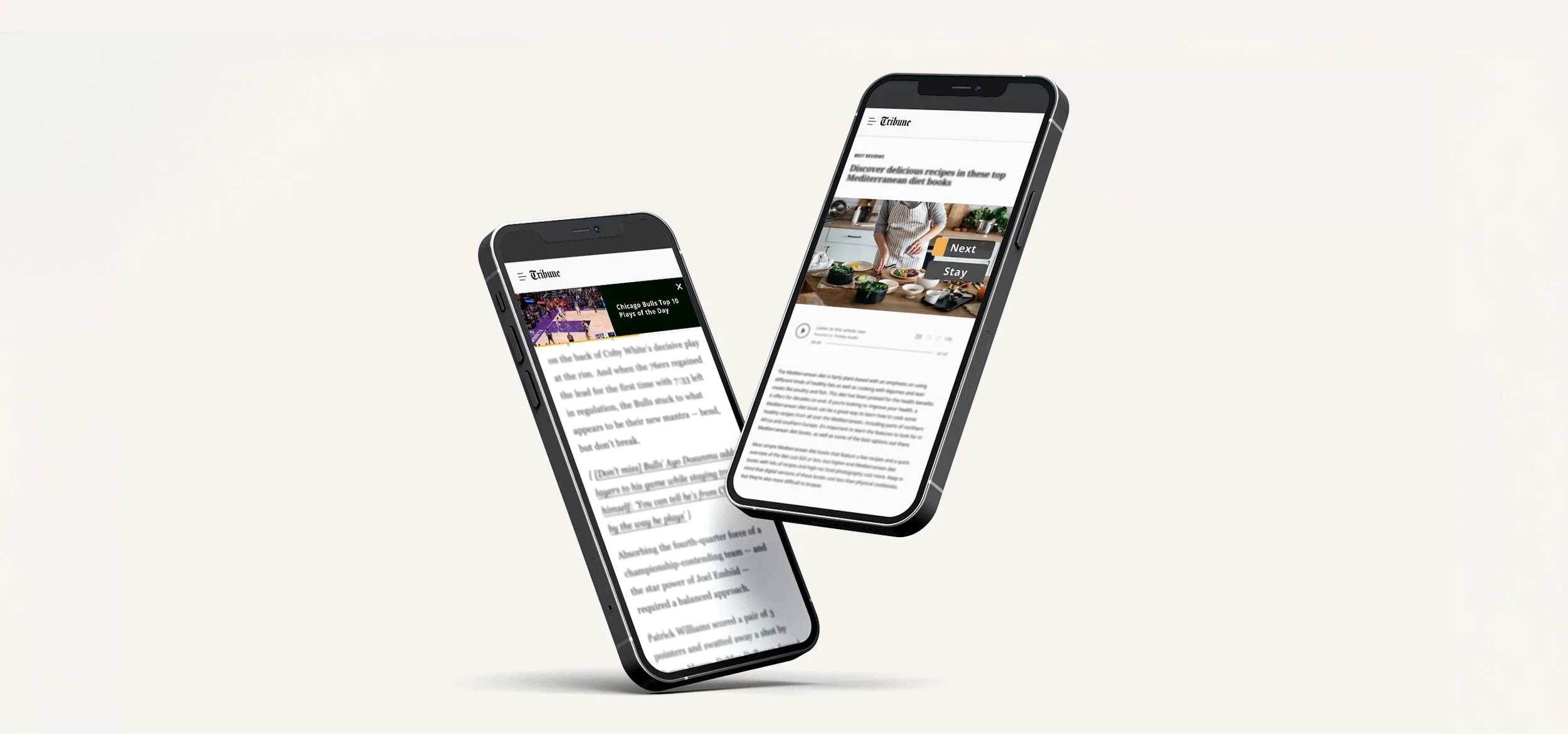
As part of a broader revamp of STN’s video player interface, my work included designing two focused product experiences: the Optimized Mobile Player (OMP) and STN Engage.
OMP addressed the specific challenges of presenting video on smaller screens, while Engage introduced a prompt for viewers to decide whether to continue watching the current video or move to the next one.
Together, the projects explored how thoughtful player design could support viewer needs and publisher goals at the same time—improving clarity and control without losing sight of viewability, engagement, and monetization.
KEY SKILLS DEMONSTRATED: Product Design • User Research • Mobile UX • Interaction Design • Responsive Design • Video Player UX • Measurement Strategy • Cross-Functional Collaboration
SCOPE:
Conducted discovery interviews with current publishing partners and viewers
Redesigned the STN video player across mobile viewing contexts
Created the responsive interaction model for the Optimized Mobile Player
Designed STN Engage’s required Stay and Next interaction
Defined a post-launch qualitative and quantitative measurement plan
Partnered with Product and Engineering throughout discovery and delivery
Online video players sit at the intersection of several competing needs. Viewers want an experience that respects their attention, publishers need video to remain visible and engaging, and advertisers depend on measurable viewability.
Mobile amplified these tensions. Screen space was limited, layouts changed across devices and orientations, and a player that became too dominant could interfere with the article experience. At the same time, conventional playback experiences gave viewers little control over what played next.
The Challenge: Balancing Viewer Experience with Publisher Performance
Key Challenges:
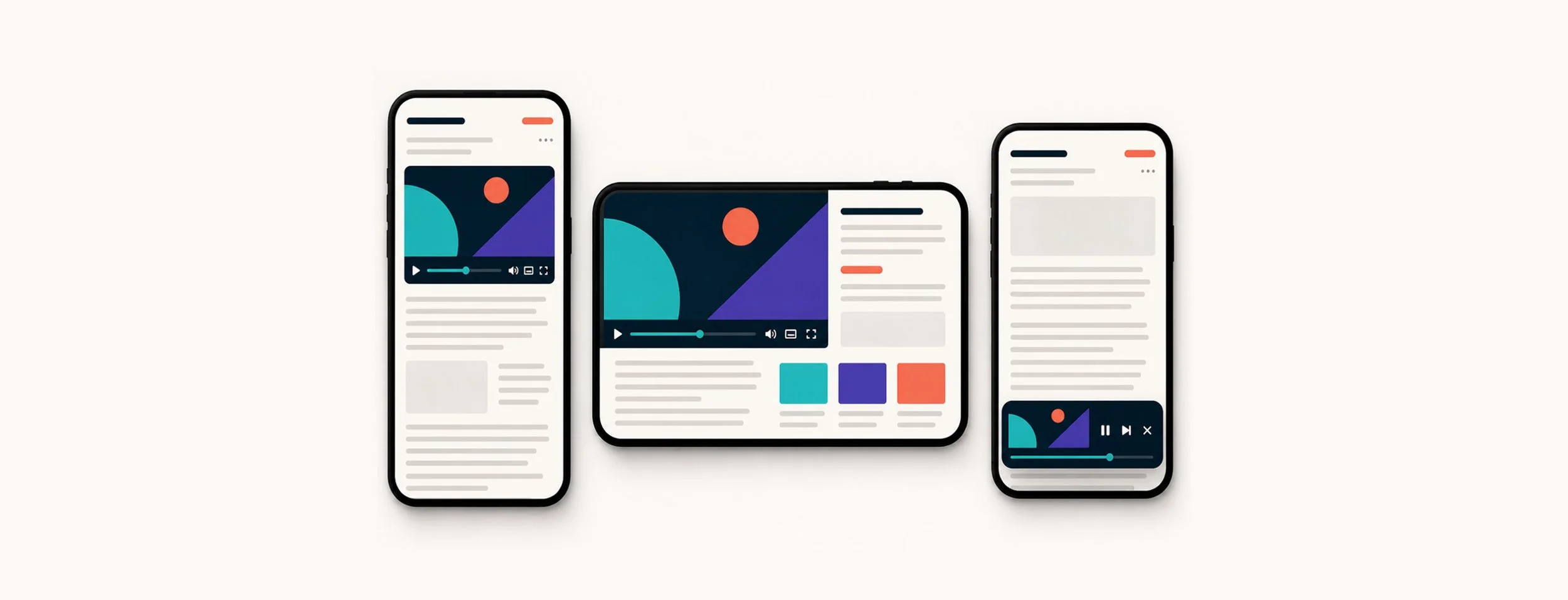
Keep video visible without overwhelming page content
Adapt the player across portrait and landscape orientations
Support inline, persistent, and full-screen viewing states
Make player controls clear and touch-friendly
Improve viewability without creating a disruptive experience
Require an explicit viewer decision to increase active participation and support publisher outcomes without adding unnecessary complexity
Discovery & User Research
Understanding the needs of publishing partners and the people viewing their content:
Before exploring solutions, we interviewed current STN publishing partners and viewers to understand how the existing player performed within real publishing and viewing environments.
Partner conversations focused on mobile implementation challenges, viewability, close-out behaviour, monetization priorities, and how the player interacted with surrounding editorial content. Viewer interviews helped us understand playback habits, expectations around persistent video, comprehension of player controls, and reactions to interruptions or required interactions.
We synthesized the findings into recurring needs, areas of friction, and product hypotheses that could guide both the initial designs and post-launch evaluation.
Research Activities:
Interviewed current STN publishing partners
Interviewed viewers using online video experiences
Documented existing player behaviours and pain points
Identified competing viewer and publisher needs
Translated research findings into product requirements
Defined hypotheses for OMP and Engage
Aligned research insights with Product and Engineering
Defining Success
Translating research into product and measurement goals:
The research helped the team establish a shared definition of success. The redesigned experiences needed to improve mobile performance and encourage active viewing while remaining clear, usable, and considerate of the surrounding content experience.
We also wanted to ensure the products could be evaluated after launch. Success criteria therefore included both experience goals and the signals we would use to understand whether the designs were working as intended.
Success Criteria:
Maintain a clear and usable experience across mobile layouts
Minimize friction between video and editorial content
Make required player actions immediately understandable
Increase active participation in the viewing experience
Support publisher viewability and monetization goals
Establish baseline and post-launch performance measures
Create a framework for ongoing product iteration
Planning for Measurement & Iteration
Building a feedback loop beyond the initial launch:
Because OMP and Engage introduced new player behaviours, launch was treated as the beginning of the learning process rather than the end of the project.
Before release, we developed a measurement plan that combined quantitative product data with qualitative partner and viewer feedback. Performance data would show what people did, while interviews and direct feedback would help explain why they behaved that way.
Together, these signals would allow the team to validate initial assumptions, identify unexpected friction, and prioritize improvements for future releases.
Quantitative Signals:
Mobile video viewability
Player close-out rates
Player loads and total video plays
Videos viewed per visitor
Stay and Next selection rates
Viewing behaviour following each selection
Mobile revenue and monetization performance
Qualitative Signals:
Follow-up interviews with publishing partners
Follow-up interviews with viewers
Feedback on persistent player behaviour
Reactions to the required Stay and Next interaction
Partner implementation feedback
Recurring usability themes across publisher environments
Iteration Process:
Compare post-launch results with initial baselines
Evaluate results against product hypotheses
Identify patterns of viewer friction or disengagement
Review findings with Product and Engineering
Prioritize improvements based on user and business impact
Release refinements and continue measuring performance
Creating the Optimized Mobile Player
Areas of Focus:
Responsive portrait and landscape layouts
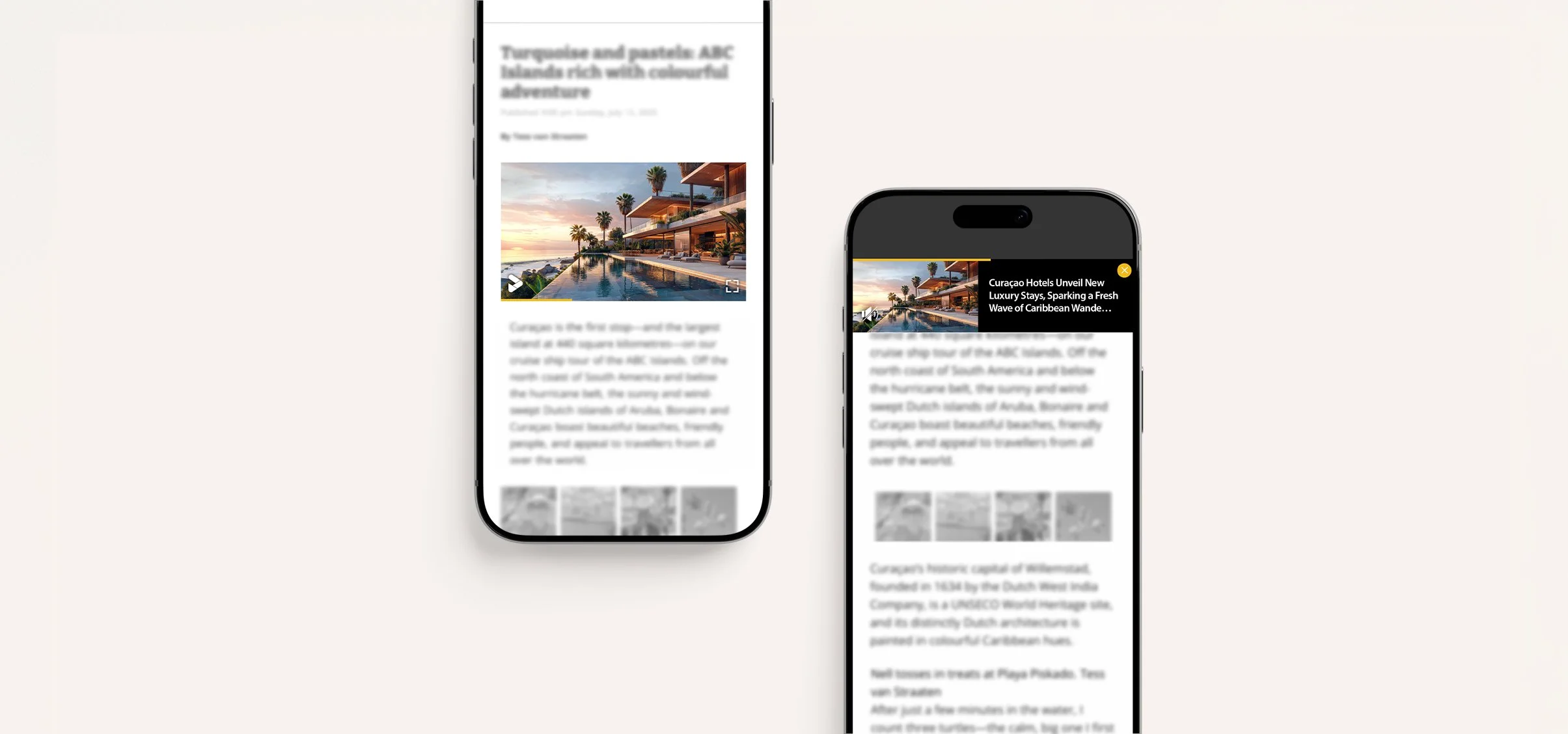
Inline and persistent player states
Clear and discoverable close-out controls
Touch-friendly playback interactions
Balanced use of limited screen space
Consistent behaviour across publisher implementations
Flexible patterns that could support different mobile contexts
Designing a mobile-specific experience instead of a smaller desktop player:
The Optimized Mobile Player was created to address the particular challenges of presenting video on smaller screens. It needed to adapt smoothly across mobile layouts while preserving familiar controls and remaining considerate of the surrounding article experience.
I focused on establishing a clear hierarchy between the video, essential controls, and page content. Persistent states kept video accessible as viewers moved through an article, while clear close-out behaviour ensured they could easily dismiss the player when it was no longer relevant.
The responsive interaction model also needed to account for changing screen dimensions and device orientations without creating separate, disconnected experiences.
Designing STN Engage
Areas of Focus:
Establishing a clear, required decision point
Making Stay and Next actions immediately understandable
Communicating the result of each choice
Minimizing the burden of the additional interaction
Supporting smooth transitions between videos
Tracking Stay and Next selections
Supporting additional video plays and advertising opportunities
Maintaining consistency with the wider player system
Turning passive playback into measurable viewer participation:
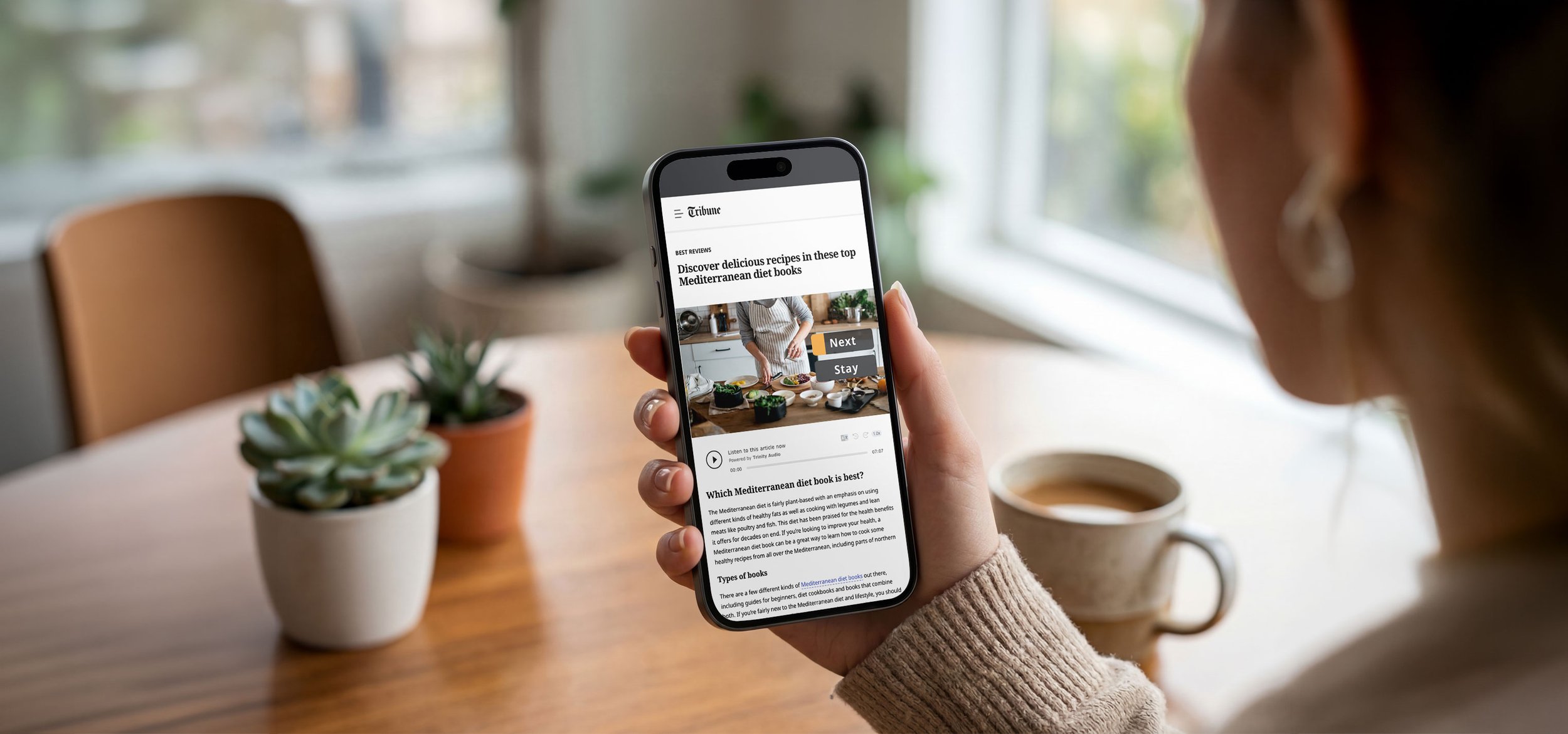
STN Engage introduced a required decision point within the viewing experience. Viewers were prompted to select Stay to continue watching the current video or Next to advance to new content.
Although the options gave viewers control over what played, the interaction itself served a deliberate business purpose. It transformed passive playback into measurable participation, generated clearer signals of viewing intent, and created additional opportunities for video plays and pre-roll inventory.
I designed the interaction to be immediately understandable while minimizing the effort required from viewers. The prompt needed to attract attention and generate a response without feeling disconnected from the wider playback experience.
The Outcome
Creating measurable player experiences and a foundation for continued improvement
OMP and Engage extended STN’s player system in complementary ways. OMP introduced an experience designed specifically around the constraints of mobile publishing, while Engage created a deliberate interaction point that encouraged active participation and supported publisher outcomes.
The post-launch measurement plan established a framework for evaluating both products through behavioural data and ongoing feedback. STN later published product and publisher performance results associated with these experiences. These figures demonstrate the products’ performance after launch rather than directly measuring my individual design contribution.
Results:
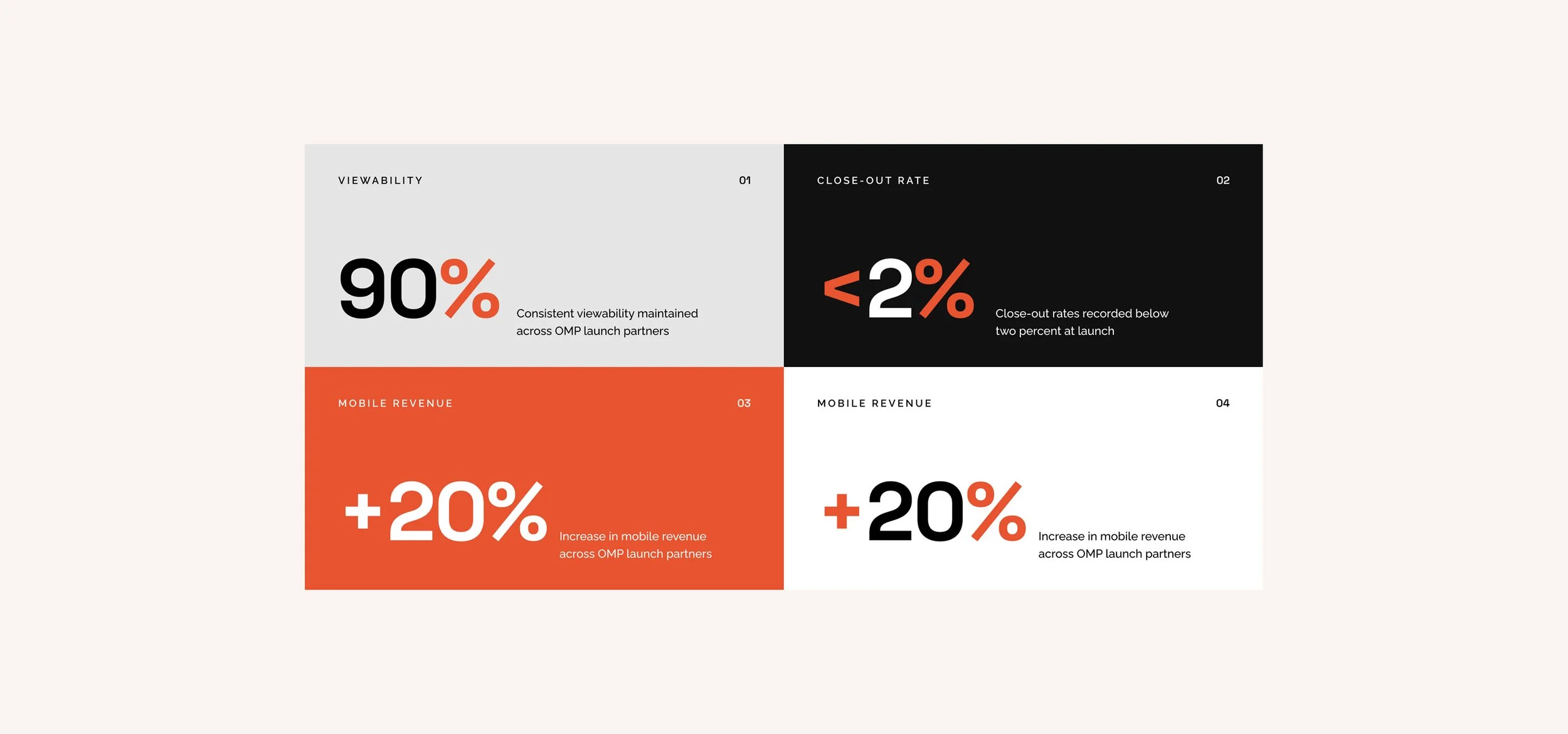
OMP launch partners maintained consistent viewability of 90%
OMP launch partners recorded close-out rates below 2%
OMP launch partners saw a 20% increase in mobile revenue
After broad Engage adoption, one major publisher saw 25% higher revenue and approximately 75% more video plays
Established a mobile-specific player experience across responsive layouts
Introduced measurable viewer participation through Stay and Next
Created a framework for combining behavioural data with qualitative feedback
Established a foundation for continued testing and product iteration
Reflection
This project reinforced the importance of involving both customers and end viewers when designing a product that serves multiple audiences. Publishing partners helped us understand operational and commercial priorities, while viewer research provided insight into how those decisions affected the viewing experience.
It also demonstrated the value of making the business purpose of an interaction explicit. Engage was designed to give viewers a clear choice, but requiring that choice was ultimately intended to produce measurable participation and stronger publisher outcomes.
Planning for measurement before launch helped frame both products as evolving experiences. Combining quantitative performance data with qualitative feedback created a more complete picture of product behaviour and gave the team a clearer path for evaluating and improving the experiences over time.
Key Takeaways:
Research both the customer and the end-user experience
Make business objectives explicit during the design process
Translate research findings into measurable hypotheses
Define success signals before launching a product
Combine quantitative behaviour with qualitative context
Design responsive systems rather than isolated screens
Treat launch as the beginning of an ongoing learning cycle