Competitive Research & Product Strategy for AI-Powered Analytics Experiences
ROLE: Lead Product Designer
CLIENT: Minute Media / STN Video
INDUSTRY: Digital Media & Video Technology
As AI rapidly transformed analytics and reporting tools, Minute Media explored how conversational AI and intelligent assistance could improve complex reporting workflows and data interpretation.
I led a research initiative to understand how users perceived emerging AI-powered analytics experiences, identify trust barriers to adoption, and uncover opportunities for integrating AI into reporting workflows in meaningful and transparent ways.
KEY SKILLS DEMONSTRATED: AI Product Design • User Research • Competitive Analysis • Product Strategy • Survey Design • Insight Synthesis • Emerging Technology Evaluation
SCOPE:
Research Strategy
Competitive Analysis
Survey Design
User Research
Insight Synthesis
Product Strategy
AI Experience Evaluation
The Challenge
Understanding User Expectations for AI-Powered Analytics
The rapid adoption of generative AI created new opportunities for analytics and reporting products. At the same time, questions around trust, transparency, and reliability introduced significant challenges for product teams.
While AI promised to simplify data analysis and accelerate insights, it remained unclear how users wanted AI integrated into their workflows and what factors influenced adoption.
The challenge was to move beyond assumptions and understand how users perceived AI-generated insights, where trust broke down, and which experiences would provide meaningful value.
Key Questions:
How comfortable are users relying on AI-generated insights?
What factors influence trust in AI-powered reporting?
Which AI capabilities are perceived as valuable?
What concerns prevent adoption?
How should AI be introduced into analytics workflows?
Research Objectives
To guide the research, I identified three primary objectives that would help evaluate both user sentiment and emerging market patterns.
Understand User Expectations
Explore how users currently approach reporting and analytics workflows
Identify attitudes toward AI-assisted decision making
Understand expectations around transparency and control
Evaluate Competitive Approaches
Analyze how leading platforms were integrating AI capabilities
Identify common patterns and emerging trends
Assess how competitors communicated AI-generated insights
Inform Product Strategy
Translate findings into actionable product recommendations
Identify opportunities for future AI integration
Establish principles for trustworthy AI experiences
Competitive Analysis
Evaluating Emerging AI Analytics Patterns
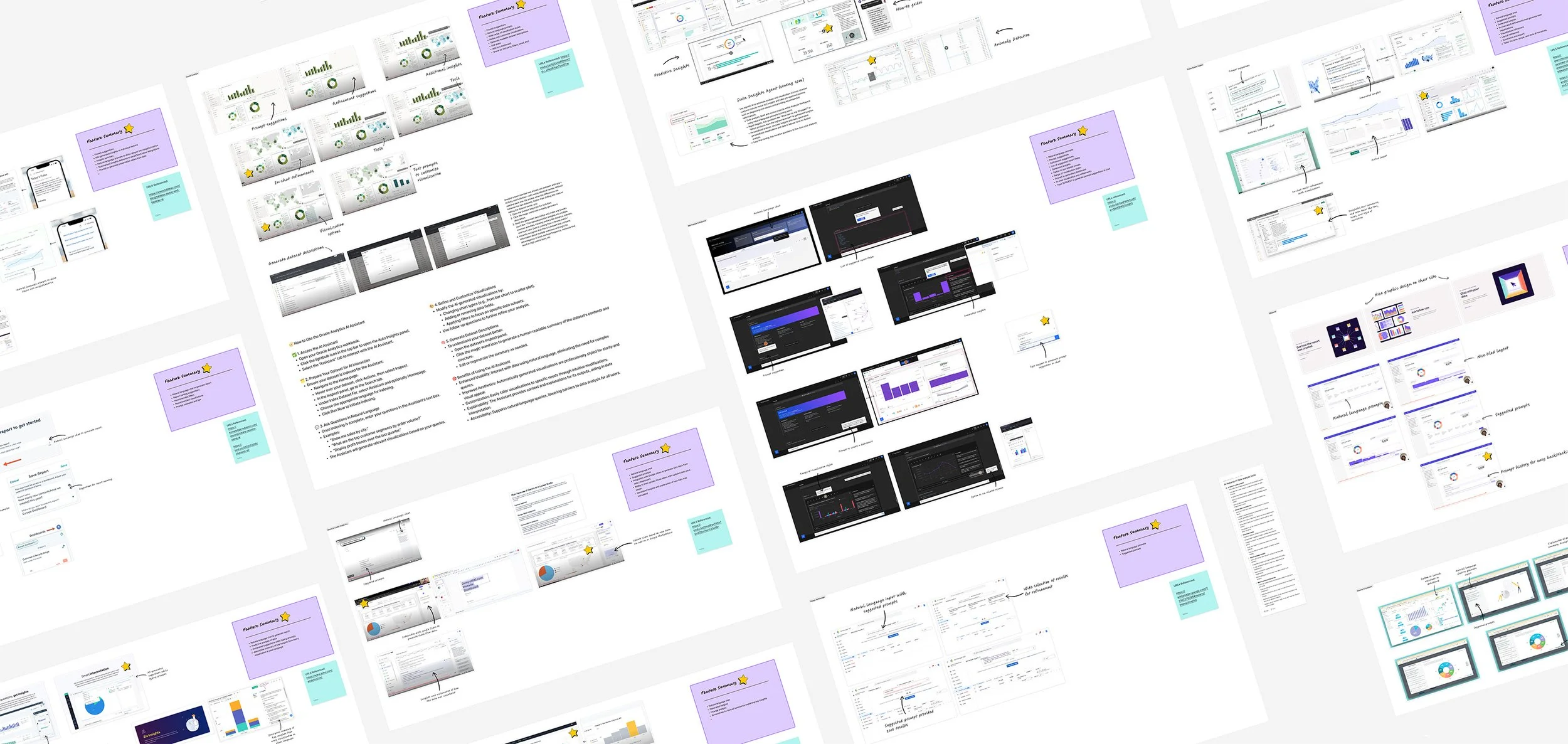
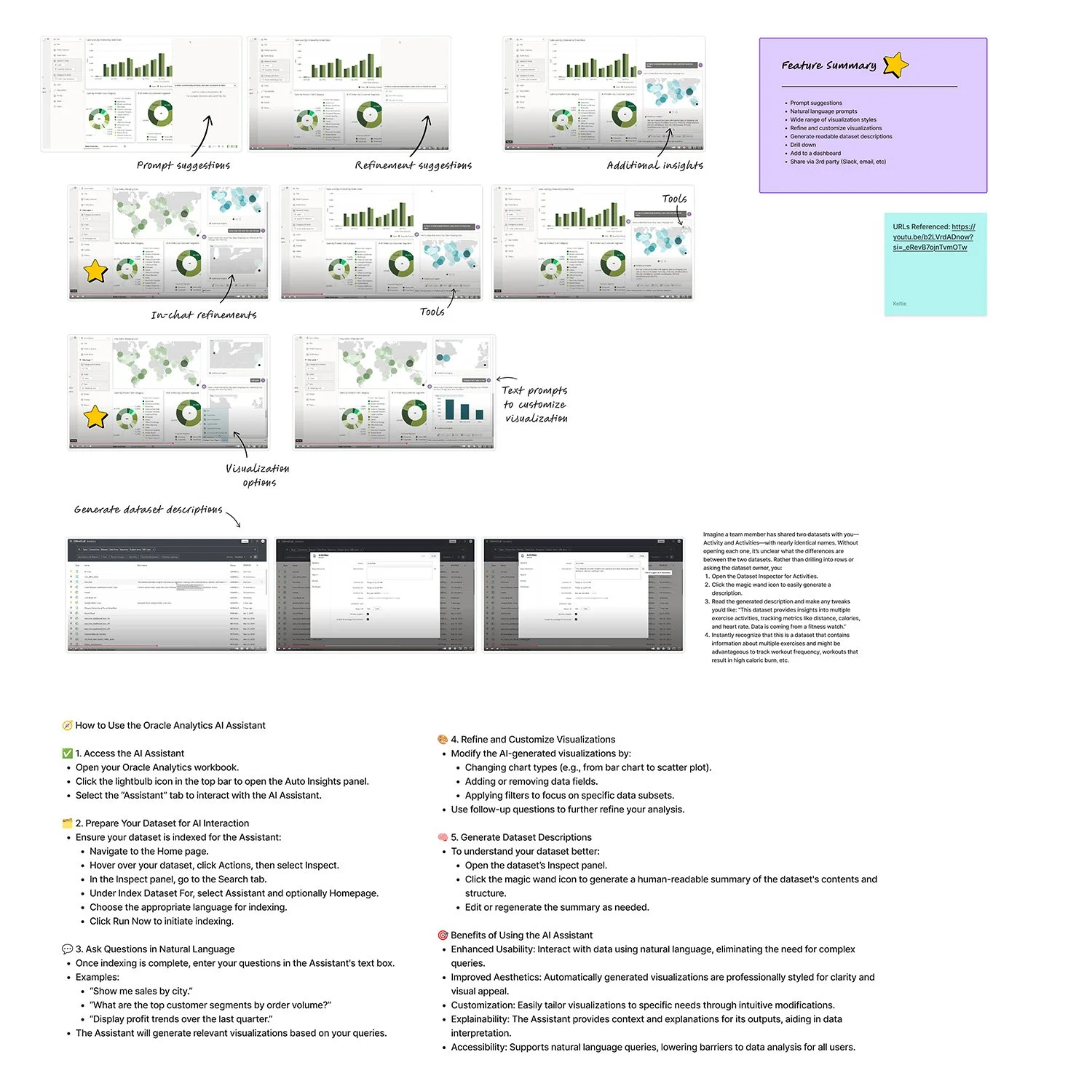
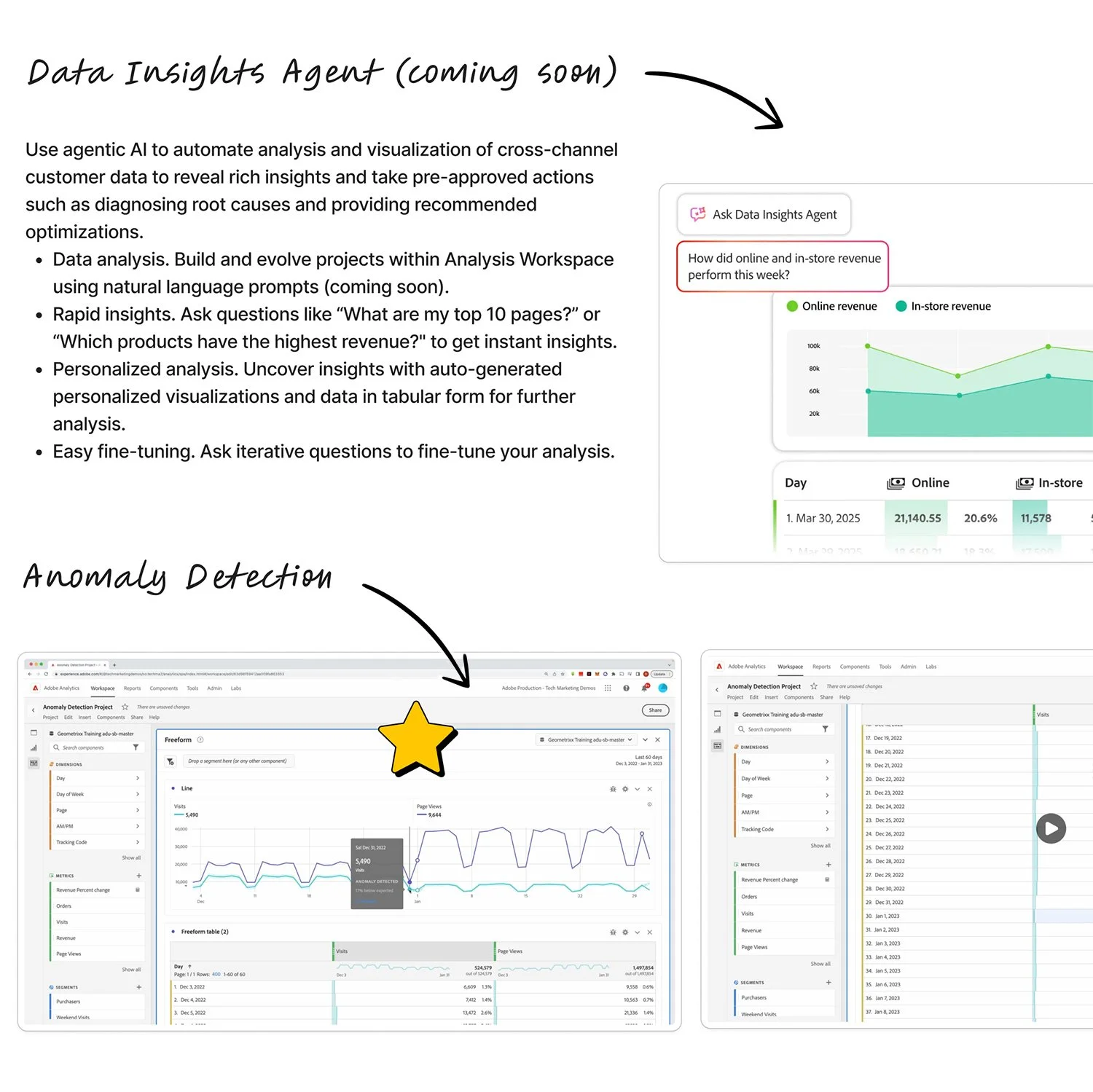
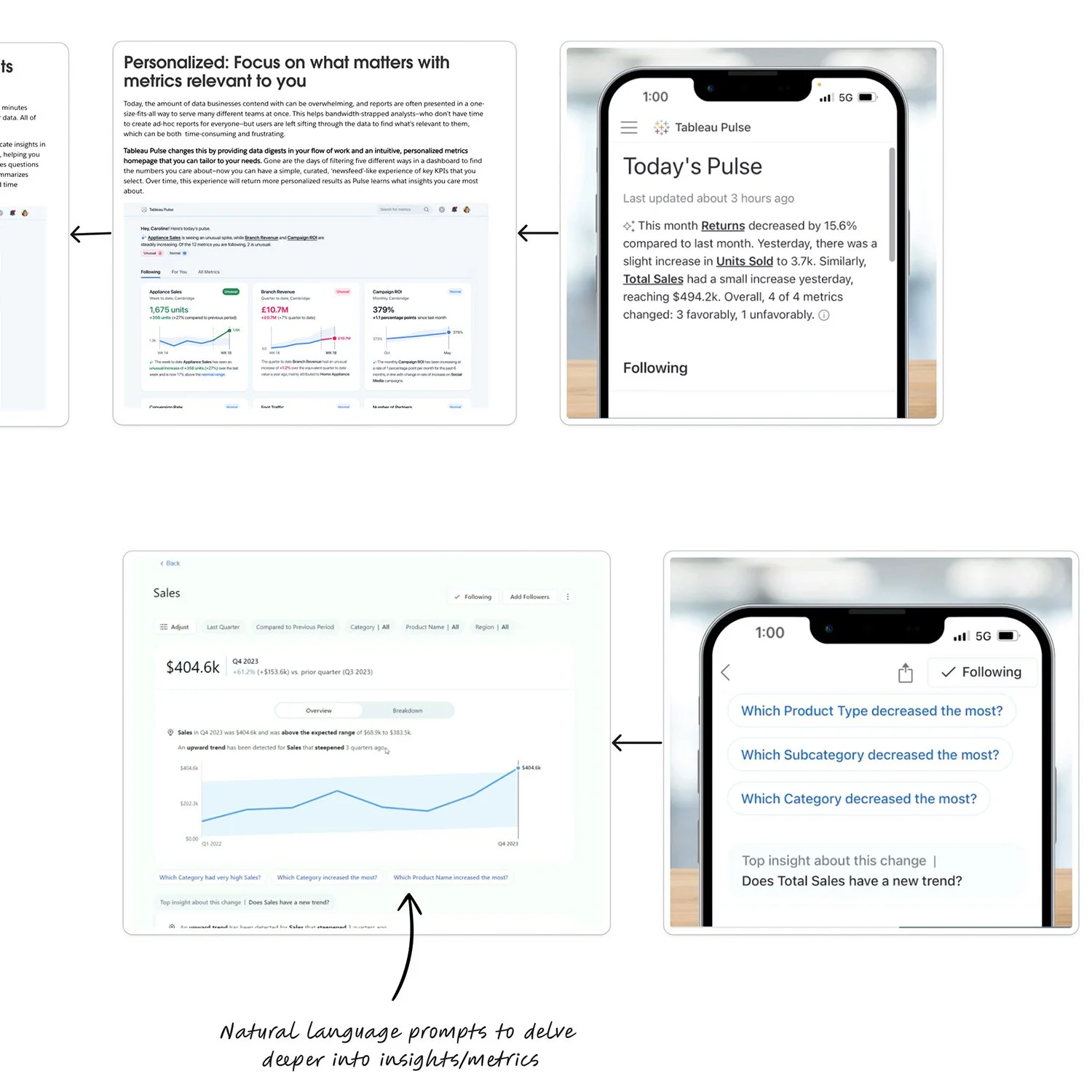
To understand how the market was evolving, I conducted a competitive review of leading analytics, reporting, and business intelligence platforms.
The goal was not simply to catalog features, but to identify how organizations were approaching AI assistance, insight generation, and user trust.
The research focused on:
Conversational interfaces
Automated insight generation
Data transparency
User control mechanisms
Prompt-driven workflows
Predictive analytics
AI-assisted visualization
Reporting automation
Guidance and onboarding systems
Explainability and trust-building patterns
AI-generated narratives and storytelling
Workflow integration
Platforms Reviewed
Microsoft Power Bi
IBM Cognos
Meta Ads Manager
Google Looker
LinkedIn Campaign Manager
Google Ads
YouTube Studio
Hubspot
Oracle Analytics
Klaviyo
Bright
Wistia
JW Player
Vimeo
User Research
Understanding Trust and Adoption
Competitive analysis revealed what organizations were building. User research helped explain how professionals felt about those emerging AI experiences.
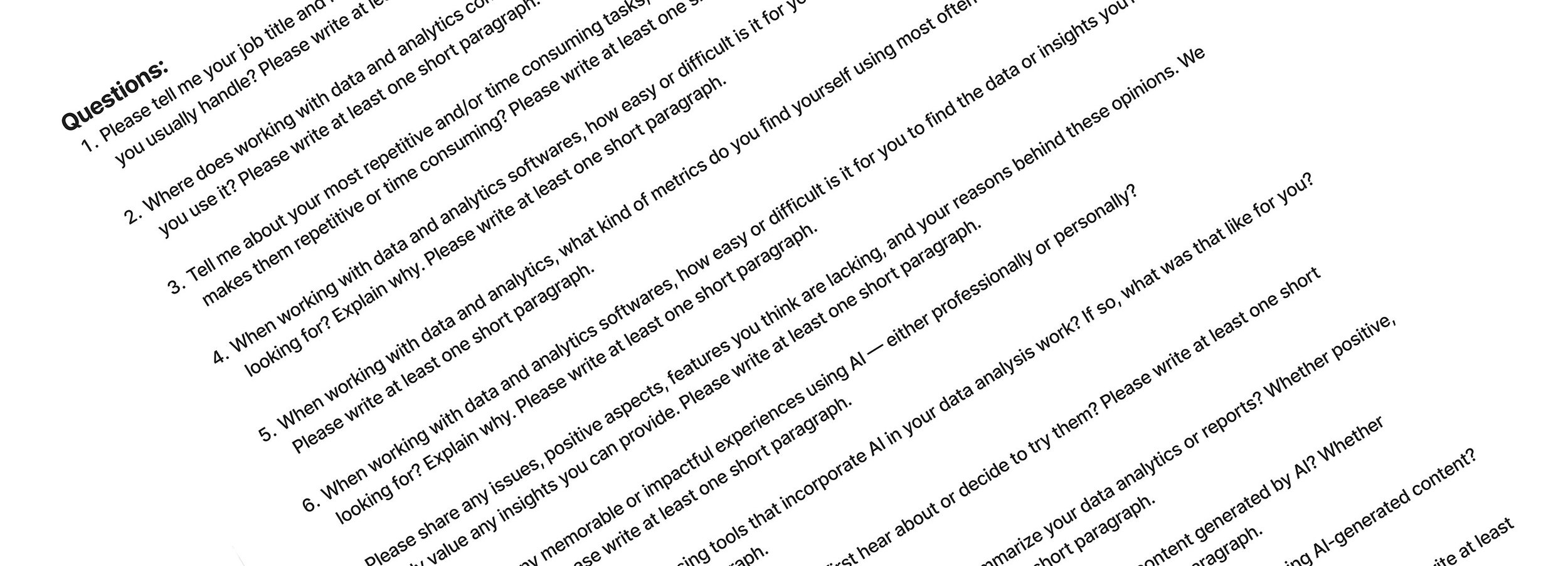
To better understand user attitudes toward AI-powered analytics and reporting tools, I designed and conducted a research study using Userlytics. The study consisted of 100 unmoderated video interviews with professionals working in relevant roles across data, analytics, marketing, publishing, and technology.
Participants were asked to evaluate existing AI-powered experiences, share their perceptions of trust and transparency, and reflect on how AI might fit into their reporting and decision-making workflows.
The research explored not only whether users were interested in AI capabilities, but also what factors influenced trust, adoption, and long-term confidence in AI-assisted tools.
Areas explored:
Confidence in AI-generated insights
Transparency expectations
Desired levels of user control
Verification behaviors
Adoption barriers
Perceived value drivers
Key Insights
What We Learned
The research revealed a consistent theme: users were interested in AI assistance, but trust depended heavily on transparency and control.
AI Works Best as an Assistant, Not a Replacement
Users were generally receptive to AI-generated recommendations when positioned as supportive guidance rather than autonomous decision-making. People wanted help interpreting information, not automated conclusions presented without context.
Transparency Builds Trust
Users consistently expressed greater confidence when AI-generated insights included supporting evidence, explanations, or references to underlying data. The ability to understand how a conclusion was reached was often more important than the conclusion itself.
Verification Remains Essential
Even users who expressed enthusiasm about AI capabilities frequently validated results independently before acting on recommendations. This behaviour suggested that AI experiences should support verification rather than attempt to replace it.
Users were less interested in AI for the sake of automation and more interested in AI that helped them better understand complex information within their existing workflows.
Context Matters More Than Automation
Trust & Transparency Were Critical
Participants consistently preferred experiences that allowed them to review, adjust, and validate AI-generated outputs. The most trusted experiences positioned users as decision-makers rather than observers.
Product Implications
Designing for Trustworthy AI Experiences
The findings revealed that successful AI products would need to prioritize trust as much as functionality.
Rather than focusing exclusively on automation, future AI-powered experiences should help users understand, evaluate, and validate information more effectively.
Design Principles Identified
Prioritize explainability over automation
Surface supporting evidence whenever possible
Maintain user control over decision-making
Enable verification workflows
Clearly communicate confidence and limitations
Integrate AI into existing workflows rather than replacing them
Strategic Recommendations
Translating Research into Product Direction
Based on the research findings, I developed a set of strategic recommendations to guide future AI-powered reporting experiences.
Recommendations
Introduce conversational AI as a workflow enhancement rather than a replacement
Provide transparent access to supporting data and sources
Design for human review and validation
Clearly communicate confidence levels and uncertainty
Support iterative exploration and follow-up questioning
Prioritize trust-building mechanisms early in adoption journeys
Outcome
Creating a Foundation for Future AI Product Decisions
This research initiative provided Minute Media with a clearer understanding of how users perceived AI-powered reporting experiences and what factors influenced adoption.
The findings helped establish a framework for evaluating future AI opportunities while grounding product decisions in user needs rather than technology trends.
Results
Identified key trust drivers influencing AI adoption
Established principles for future AI-powered experiences
Created a shared understanding of user expectations
Informed future product exploration and prioritization
Provided strategic direction for integrating AI into analytics workflows
Reflection
This project reinforced the importance of understanding human behaviour before designing around emerging technologies.
While AI capabilities continue to evolve rapidly, user trust develops more slowly. Successful AI experiences require more than intelligent systems—they require transparency, control, and clear communication.
The research highlighted how product design can play a critical role in bridging the gap between technological capability and user confidence.
It also strengthened my ability to evaluate emerging technologies through a human-centered lens, translating uncertainty into actionable product strategy and design direction.