Minute Media Unified VMS —
Migrating complex publishing workflows without disrupting the people who relied on them
ROLE: Lead Product Designer
PLATFORM: Enterprise video management and publishing platform
TEAM: Product, Engineering, Design, and cross-organizational stakeholders
SCOPE: Research, workflow analysis, IA, user flows, wireframes, prototyping, high-fidelity UI, design-system integration, QA
Project Overview —
Following Minute Media’s acquisition of STN Video, I led product design efforts for integrating STN users’ core publishing workflows into Voltax, Minute Media’s enterprise video management platform.
The project required balancing user familiarity with platform consistency, preserving critical publisher workflows while aligning new functionality with an established design system and technical framework.
Project Outcomes —
Core video management workflows were successfully integrated into Voltax
Upload, playlist, and content discovery experiences were streamlined and modernized within a unified platform
Existing user workflows remained central throughout the migration process
New functionality aligned with platform standards and design system requirements
Legacy experiences were consolidated within a scalable ecosystem
The project established a foundation for future platform enhancements
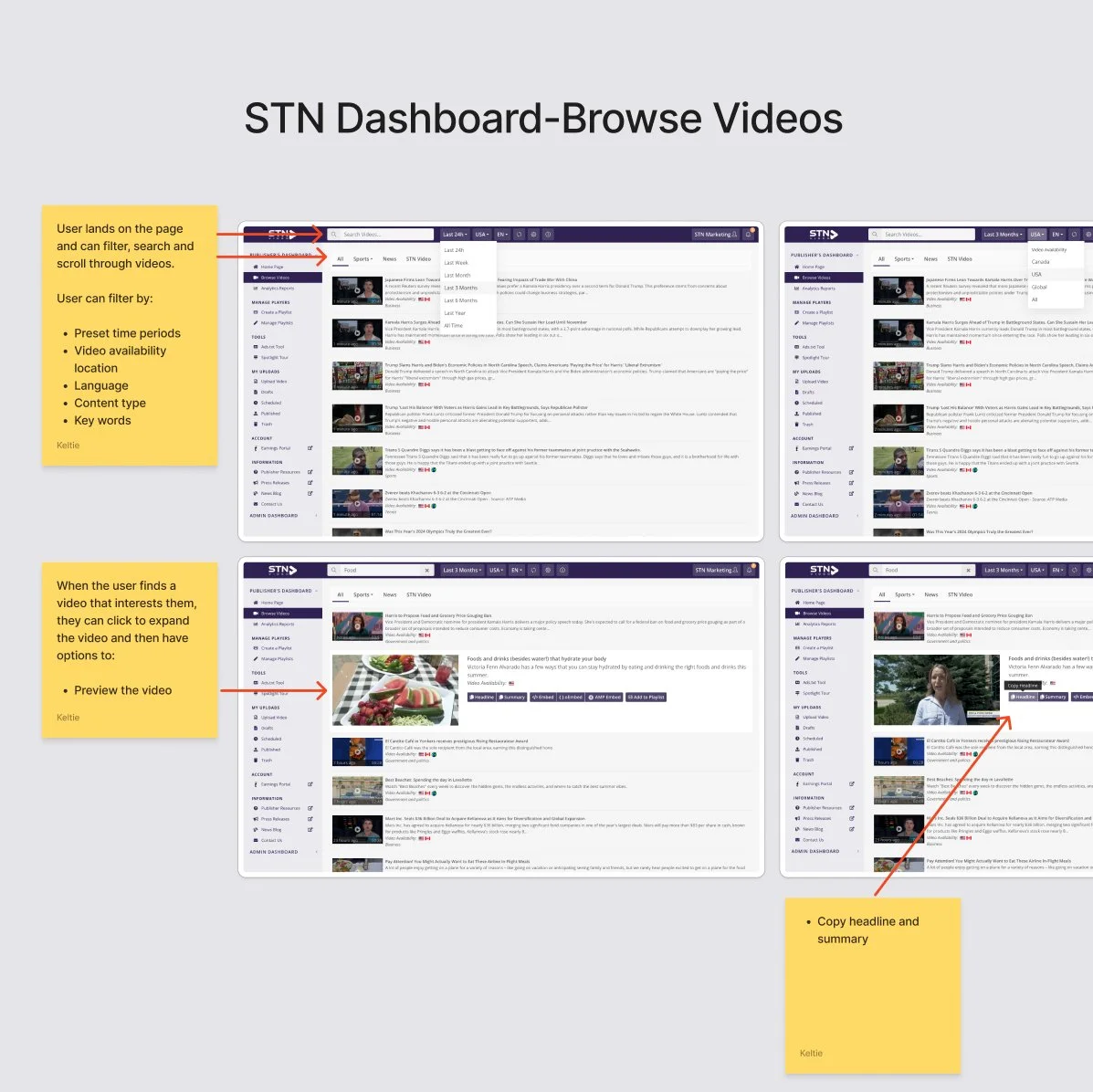
Two platforms, two ways of working —
The acquisition created more than a visual-integration problem. STN publishers had established ways of uploading, organizing, finding, grouping, and publishing videos, while Voltax had its own architecture, interaction patterns, component library, and technical constraints.
Simply recreating STN inside Voltax wouldn’t work because of Voltax’s technical constraints. But forcing publishers into unfamiliar workflows risked disrupting tasks they performed every day.
The problem: How could we bring STN workflows into Voltax without disrupting familiar ways of working? What needed to be preserved, what could change, what could we leverage from Voltax’s existing components and patterns, and where did the platform itself need to adapt?
What could change, and what could not —
I worked with existing workflows, user feedback, stakeholder knowledge, technical constraints, and the Voltax product system to understand where change would create value and where it would create unnecessary disruption.
Several themes became important throughout the project:
Familiar workflows mattered. Modernization could not come at the expense of discoverability or speed.
Different tasks required different ways of viewing the same content.
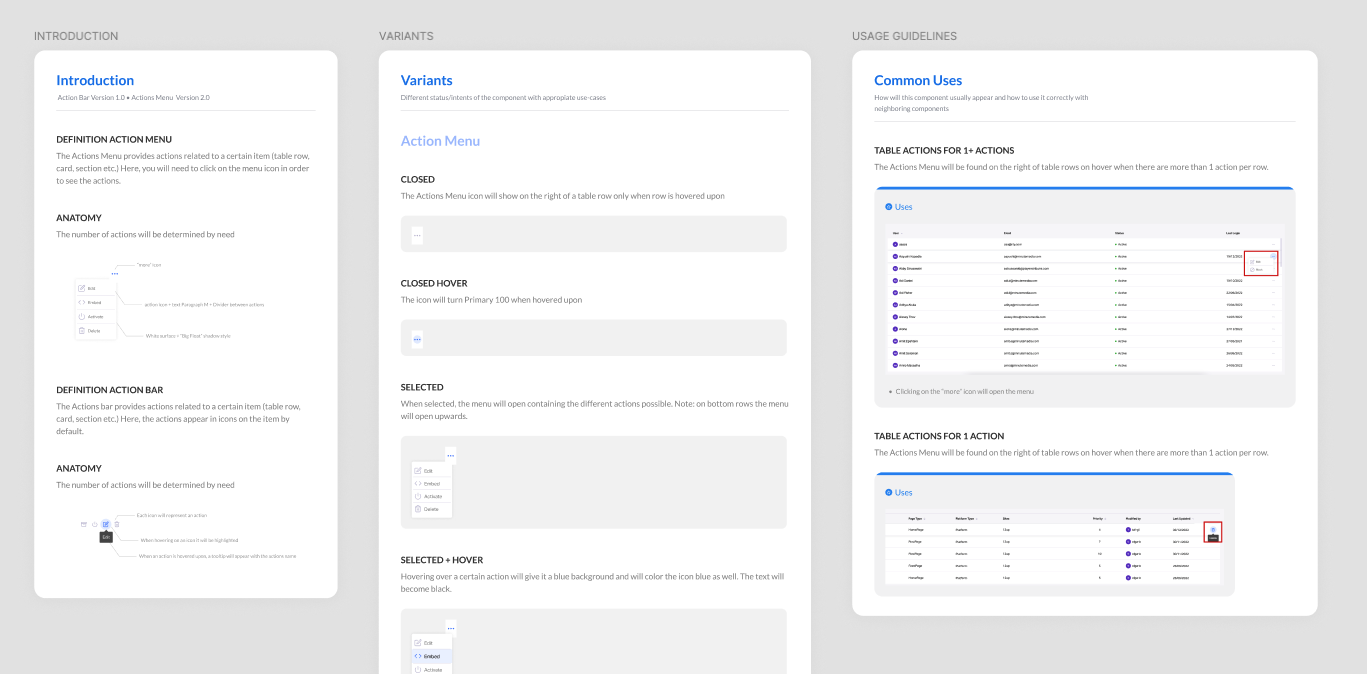
Platform consistency mattered, but not at any cost. Some STN requirements could not be solved simply by forcing them into an unsuitable pattern.
The workflows were interconnected. Individual screens could not be designed in isolation.
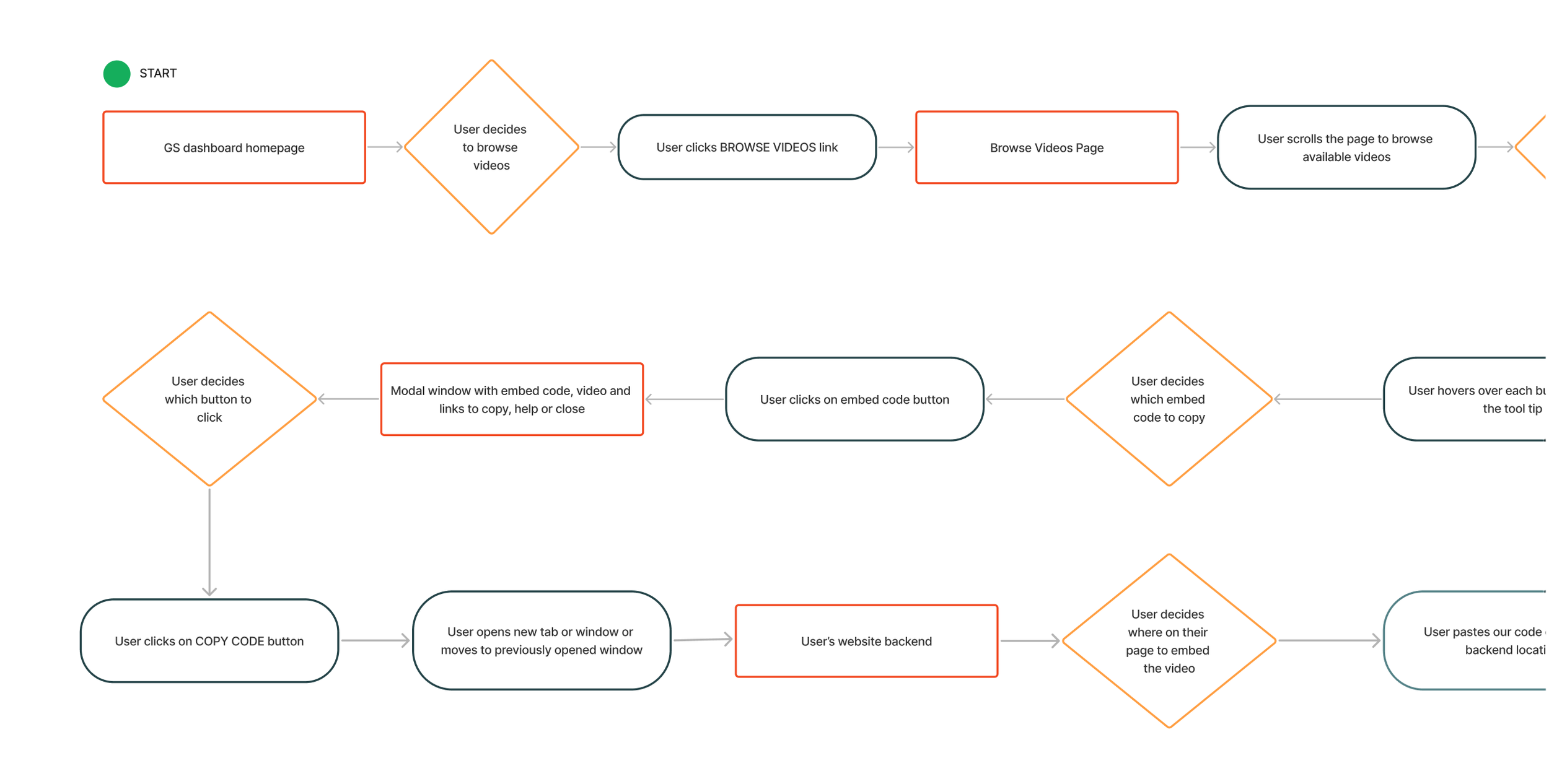
Key Decisions —
The work involved balancing familiar workflows with the opportunity to improve the experience and bring it into the broader Voltax system. Three decisions were particularly important.
Supporting different ways of finding content —
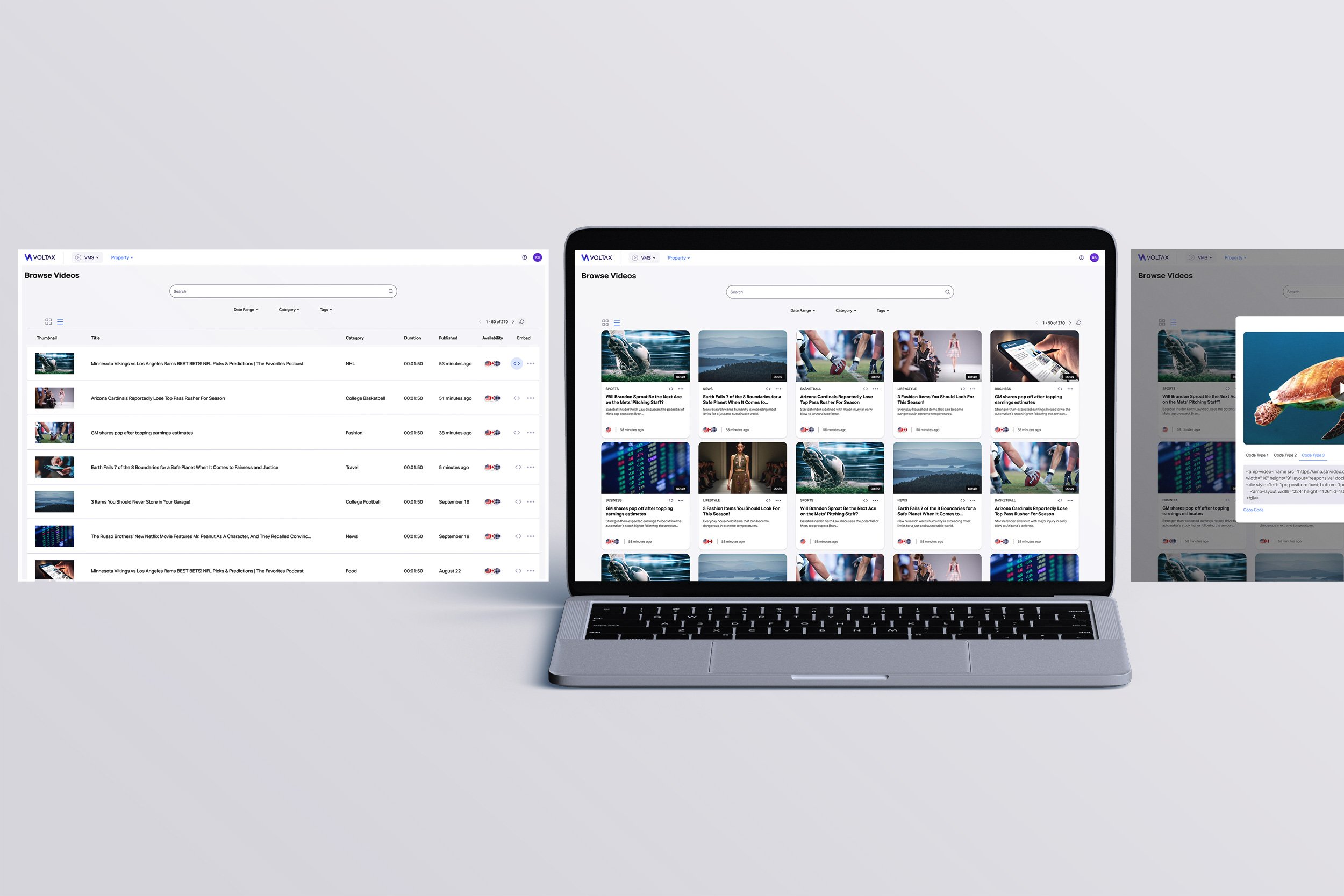
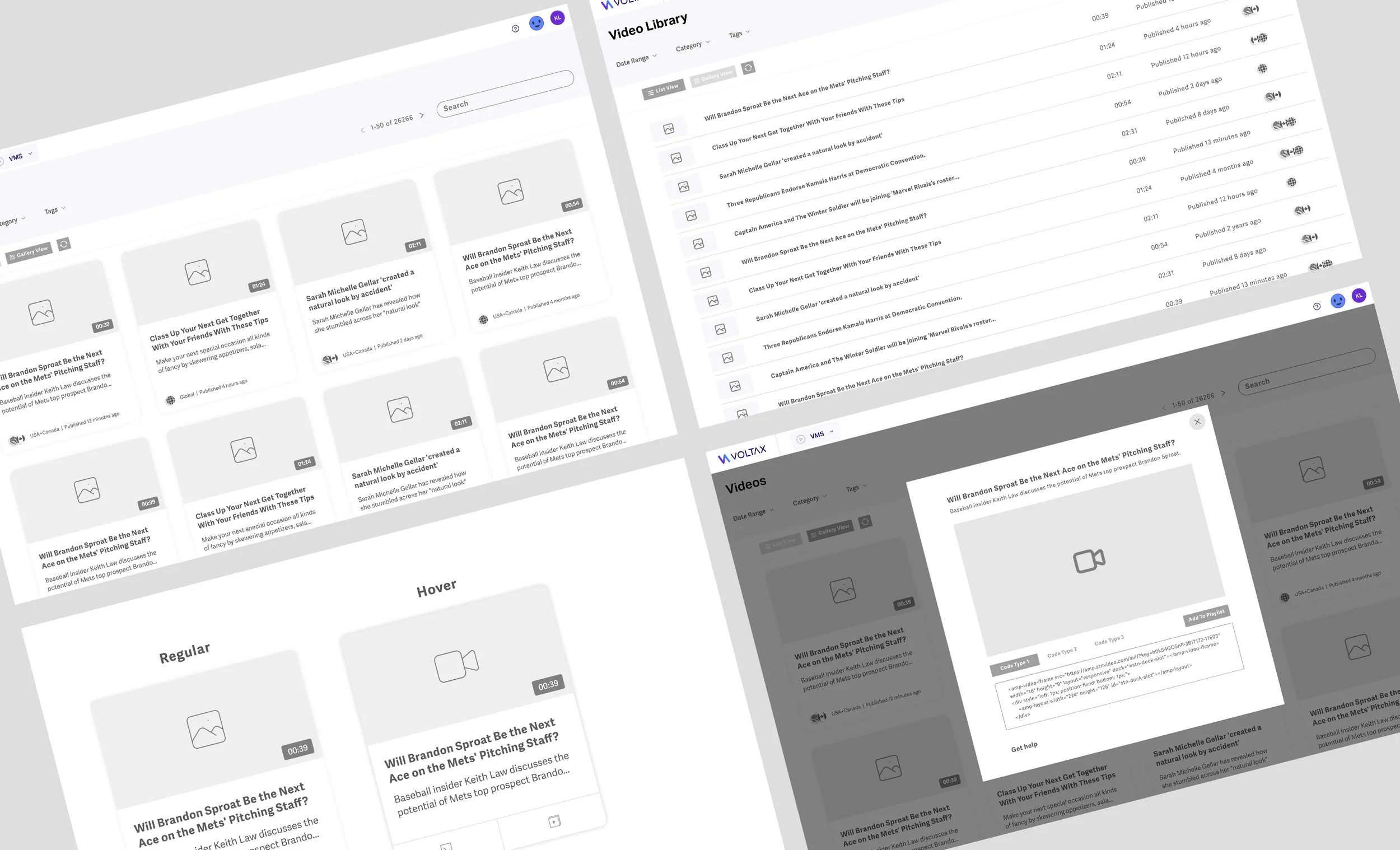
One of the key workflows we examined was how publishers browsed and managed large video libraries.
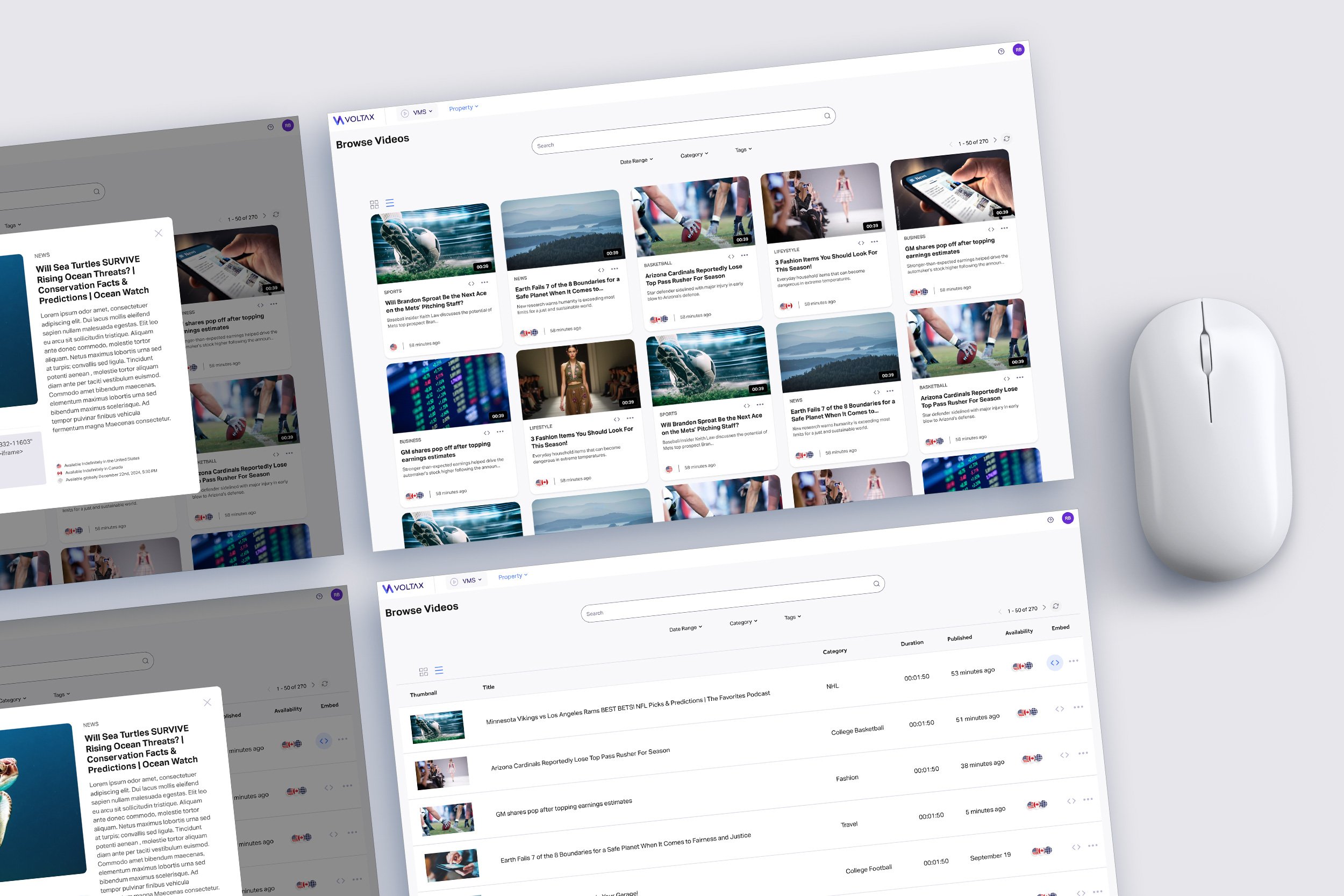
Through interviews with existing STN users, we discovered that while the platform’s list view was familiar and efficient for scanning metadata, some users found the experience limiting when evaluating visual content. Small thumbnail previews often made it difficult to quickly assess videos, resulting in additional clicks and workflow friction.
Rather than forcing users into a single workflow, I explored multiple approaches that balanced familiarity with improved usability.
Publishers needed detailed metadata when managing large libraries, but they also needed to visually scan content quickly. Optimizing for only one mode would make the other task harder.
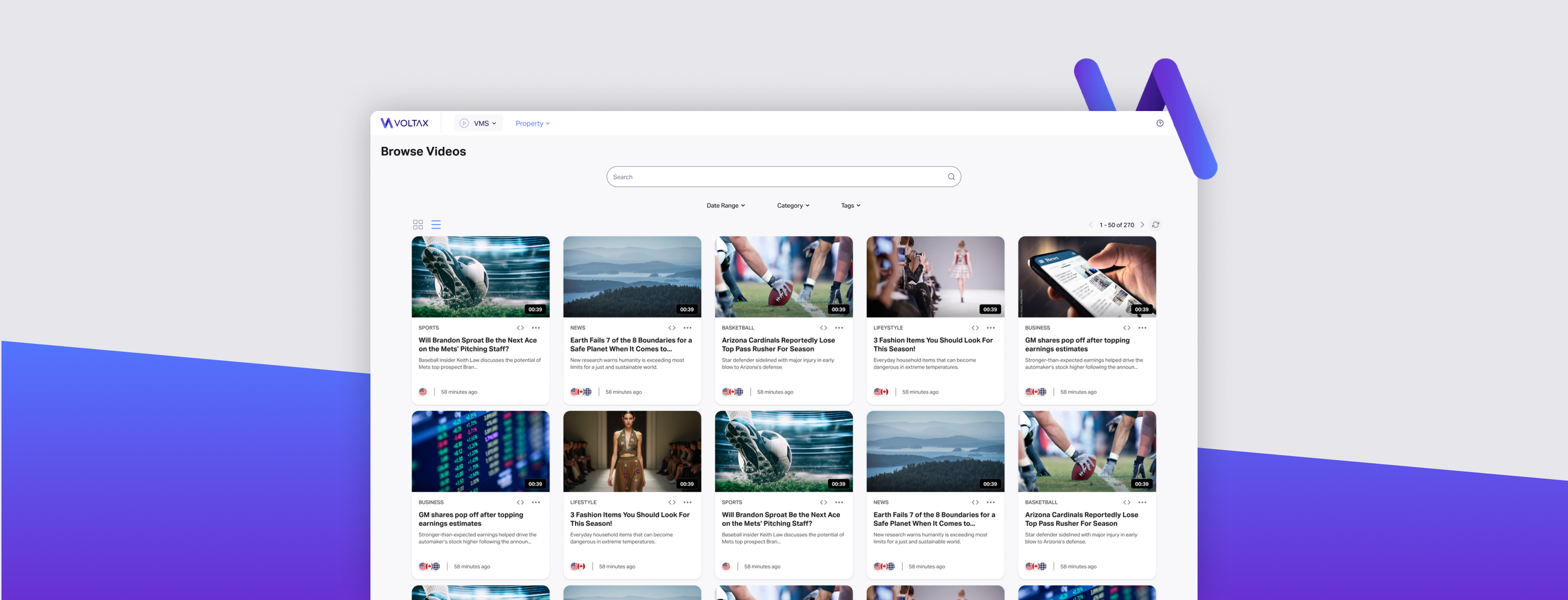
Decision: Preserve the information-dense list view while introducing a gallery view for faster visual browsing, allowing users to choose the representation that best matched the task.
This approach improved usability without disrupting established workflows while creating a more flexible foundation for future enhancements.
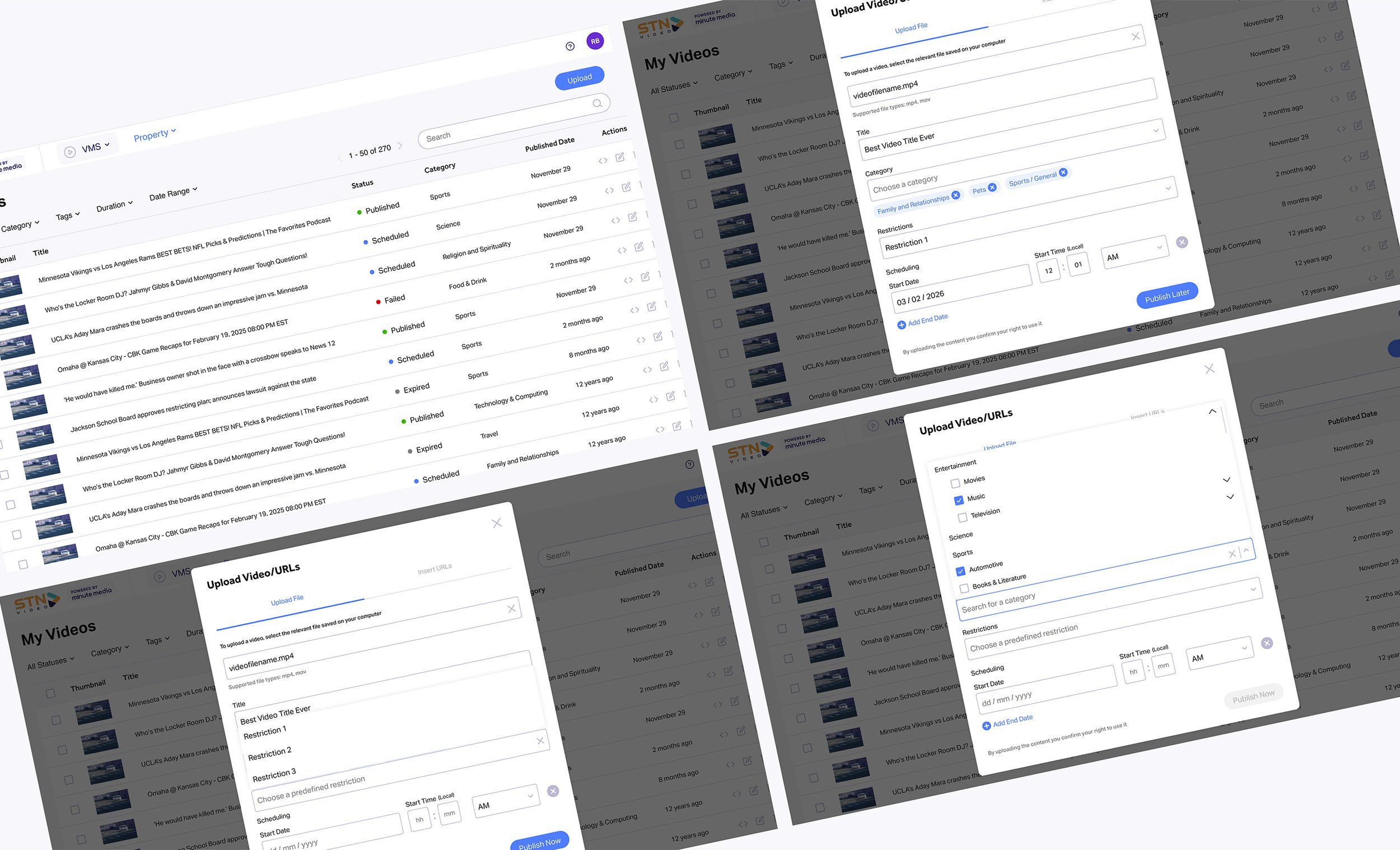
Streamlining Video Uploads —
Areas of Focus:
Designing for complex categorization
Supporting configuration of sponsored content
Supporting scheduling workflows
Simplified metadata entry
Improved category management
Reduced cognitive load
Scalable taxonomy
Uploading content was one of the most frequently used workflows within the platform, yet the experience required users to manage multiple publishing decisions simultaneously.
Publishers needed to upload content, assign metadata, categorize videos, apply restrictions, and schedule publication—all while maintaining speed and accuracy.
The challenge was creating a workflow that supported complex publishing requirements without overwhelming users.
Decision:Consolidate multiple publishing tasks into a more intuitive workflow, helping users move from content upload to publication with greater confidence and efficiency.
The solution balanced advanced publishing requirements with a streamlined user experience that aligned with the broader Voltax ecosystem.
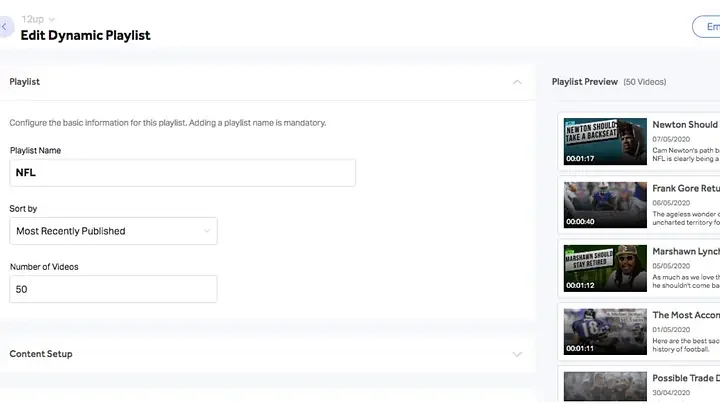
Modernizing Playlist Creation —
Areas of Focus:
Balancing data & visual context
Supporting faster content selection
Reduced context switching
Improved content discoverability
Enhanced playlist creation workflows
Better visual context for content selection
Streamlined video management
Faster content curation
Playlists played a critical role in how publishers organized, curated, and distributed content across their properties.
The legacy playlist experience prioritized metadata management but offered limited visual context when evaluating content. This often required additional navigation and made content curation more time-consuming than necessary.
The opportunity was to create a workflow that better supported both administrative management and editorial decision-making.
Decision: Improve content visibility, streamline selection workflows, and reduce unnecessary navigation. transformed a largely administrative workflow into a more intuitive content curation experience.
The solution better supported publishers managing large video libraries while aligning with broader platform standards.

The Outcome —
A Scalable Unified Publishing Experience
The project successfully integrated key STN publishing workflows into Minute Media’s Voltax platform, establishing a more unified experience for publishers while supporting broader platform goals.
Rather than recreating the legacy system, the solution focused on preserving critical user workflows while aligning them with modern product patterns and infrastructure.
Reflection
This project was a massive undertaking. It reinforced the importance of designing beyond individual screens.
The most complex challenges were not visual—they involved balancing user expectations, business objectives, technical realities, and long-term platform strategy.
Working within an established ecosystem required thoughtful compromise, strong cross-functional collaboration, and a deep understanding of how design decisions affect both immediate user needs and future product growth.
The experience strengthened my ability to navigate ambiguity, align stakeholders, and design solutions that scale within complex enterprise environments.